 Top Pick
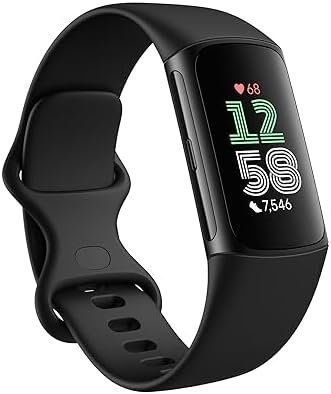
Fitbit Charge 6
Built-in GPS, heart-rate tracking, and Google apps. The most polished all-day tracker at this price.
Check price on AmazonAs an Amazon Associate I earn from qualifying purchases.
WHOOP, Fitbit, Garmin, Polar, and Amazfit compared by the training style each one actually serves.
There is no single best tracker — there is a best tracker for how you train. Chest straps win on accuracy, screenless bands win on recovery data, and budget bands cover the basics for a quarter of the price.
The wearable aisle sells five different devices as if they answer the same question, and they genuinely don't:
Answer that question honestly before comparing specs — the "best" tracker on paper is frequently the wrong one for what someone actually wants to know about their training.
Built-in GPS, continuous heart-rate tracking, and Google app integration (Maps, YouTube Music controls) baked into the wrist. About 7 days of battery, cut down on GPS-heavy weeks. The most beginner-friendly setup of anything on this list — pairs with a phone in minutes and the app surfaces the numbers that matter (steps, sleep, active zone minutes) without burying them in advanced training-load charts. Where it falls short: pace, cadence, and training-status data are noticeably shallower than Garmin's, which matters specifically if you're training for a race with pacing targets.
No screen at all — the entire experience lives in the app: HRV, strain score, sleep stage breakdown, and a daily recovery percentage that's meant to answer one question every morning: push today, or back off. The subscription isn't optional, and that's the real cost comparison against the others — budget the monthly fee across a year or two, not just the hardware price. Battery lasts 4-5 days and recharges via a slide-on battery pack so the strap never comes off, which is a clever workaround for a screenless design but one more piece of hardware to track. The single best tool here for anyone who trains hard enough that overtraining is a real risk.
A chest strap, not a wrist device — and the accuracy gap is real, not marketing. Wrist-based sensors read heart rate optically through skin and blood flow, which motion, sweat, and skin tone can all throw off; a chest strap reads the heart's electrical signal directly, the same method medical-grade monitors use. Dual Bluetooth and ANT+ connectivity means it pairs simultaneously with a phone app and gym equipment or another watch. Coin-cell battery lasts roughly a year and is user-replaceable — the only device on this list without a rechargeable battery to eventually degrade. The clear pick for anyone doing zone-based interval or threshold training where a wrist tracker's occasional few-beats-off reading actually changes how a workout should be paced.
Garmin's running and cycling data depth — pace, cadence, training status, Body Battery energy tracking — packed into a slim tracker body rather than a bulky sport watch. The training-status algorithm specifically (telling you whether you're "productive," "peaking," "overreaching," or "detraining") is more sophisticated than anything Fitbit or Amazfit offers at a similar price. About 7 days of battery without heavy GPS use. The tradeoff for the slim form factor is a smaller display than the Fitbit — readable, but not built for at-a-glance stats the way a bigger screen is.
18-day battery life, the longest on this list by a wide margin, and a display large enough to actually read despite the low price. Covers steps, sleep, heart rate, and basic workout modes competently without pretending to compete with Garmin's training-load depth or WHOOP's recovery scoring. The honest starting point for someone who isn't sure a wearable habit will stick, or who wants a backup/gift-tier device rather than a primary one.
| Tracker | Price | Screen | Battery | Best for |
|---|---|---|---|---|
| Fitbit Charge 6 | $130 | Yes | ~7 days | All-around daily use |
| WHOOP | $239 + sub | No | ~4-5 days | Recovery and training load |
| Polar H10 | $85 | No (strap) | ~1 year | Most accurate heart rate |
| Garmin Vivosmart 5 | $150 | Yes (slim) | ~7 days | Runners/cyclists wanting real data |
| Amazfit Band 7 | $40 | Yes | ~18 days | Budget entry point |
1. Do you specifically want recovery/strain scoring, and are you fine with a subscription? WHOOP, no contest. 2. Do you train hard intervals where the exact heart-rate number matters mid-workout? Polar H10, worn alongside whatever wrist tracker you already have. 3. Do you run or cycle toward a specific event or pace goal? Garmin Vivosmart 5. 4. Do you want one device that covers everything reasonably, with the least setup friction? Fitbit Charge 6. 5. Are you not sure this becomes a habit, or is budget the deciding factor? Amazfit Band 7.
Every rechargeable device here loses some battery capacity over 2-3 years of daily charge cycles — expect the Fitbit and Garmin's quoted week-long battery life to shrink noticeably by year two, and WHOOP's 4-5 days to follow the same pattern. Bands and straps fail before the electronics do: WHOOP and Garmin both sell replacement bands separately, which is the honest signal that the strap is a wear item, not a lifetime part. The Polar H10's elastic chest strap loses grip and stretch before its sensor pod fails — a slipping strap mid-run is the actual maintenance signal, and a replacement strap is far cheaper than a new sensor. None of these have a track record of the core tracker electronics simply failing under normal use within a typical ownership period — battery degradation and band wear are the realistic long-term costs to plan around, not sudden device failure.
Each brand's historical data mostly stays locked to its own app — years of Fitbit sleep history don't transfer to Garmin Connect, and WHOOP's strain and recovery scoring has no equivalent import into a Polar or Amazfit app. That's less relevant for a first tracker, but worth knowing if you're upgrading from one ecosystem to another: budget for losing easy access to your historical trend data, even though the underlying habit and fitness gains obviously carry over with you.
The single most common way people quietly stop using a fitness tracker isn't losing interest — it's a dead battery at the wrong moment, followed by a few days of not wearing it, followed by never putting it back on. Shorter-battery devices (WHOOP's 4-5 days, Fitbit and Garmin's roughly 7) need a fixed charging habit to survive long-term: charging during a shower or while getting ready in the morning works well since it's already a dead-time window and doesn't cost you overnight sleep-tracking data. The Amazfit's 18-day battery and the Polar H10's roughly year-long coin cell remove this failure mode almost entirely, which is part of why they're easier to keep wearing consistently even though they're less feature-rich.
The Polar H10 chest strap, without a close second — it reads the heart's electrical signal directly rather than estimating through skin via light sensors the way every wrist-based option on this list does.
No — Fitbit, Garmin, Polar, and Amazfit all function fully with a one-time hardware purchase. Optional premium app tiers exist for some of them with extra insights, but the core tracking works without a subscription.
Yes, and it's a common setup for serious athletes — the Polar H10 pairs over Bluetooth or ANT+ into a Garmin, Fitbit, or third-party app, feeding accurate heart-rate data alongside your wrist tracker's other metrics rather than forcing a choice between the two.
Less clearly — WHOOP's entire value proposition is built around training load and recovery for people pushing their limits regularly. Someone doing light, casual exercise a few times a week will get less practical use out of strain and recovery scoring than someone training hard most days.
More than it seems until you've missed a night of sleep data because a device died overnight. Devices in the 4-7 day range (WHOOP, Fitbit, Garmin) need a charging routine you'll actually stick to; the Amazfit's 18 days removes that friction almost entirely, which is part of why it's the easiest to actually keep wearing consistently.
For our full head-to-head breakdowns, see WHOOP vs. Garmin, WHOOP vs. Fitbit, Fitbit vs. Garmin, WHOOP vs. Polar H10, and Amazfit Band 7 vs. Fitbit Charge 6, or best fitness wearables for the ranked overview.
Top Pick
Built-in GPS, heart-rate tracking, and Google apps. The most polished all-day tracker at this price.
Check price on Amazon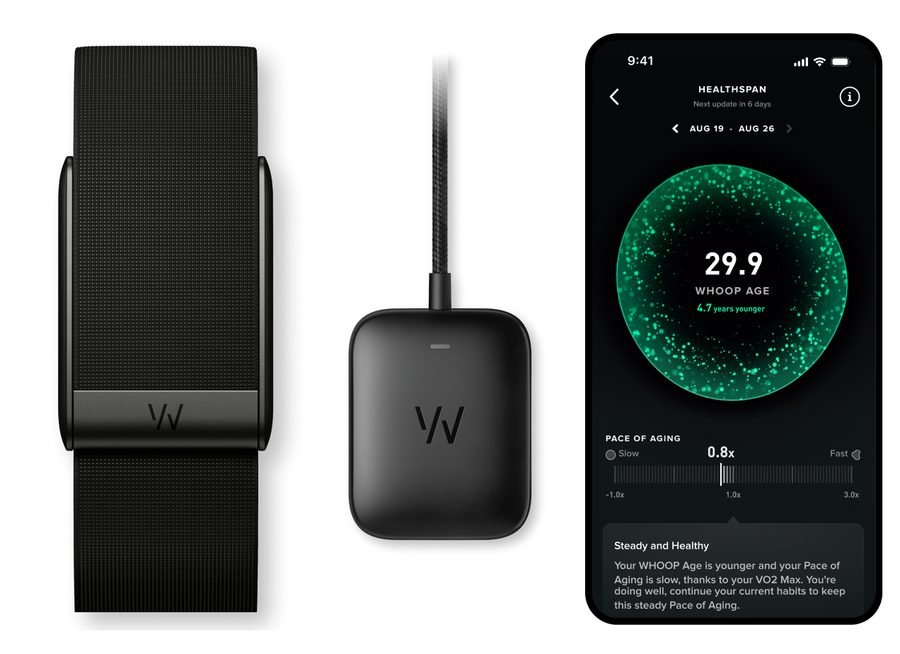
No screen, all data. Tracks HRV, strain, sleep, and recovery. The wearable for people who are serious about optimization.
Check price on Amazon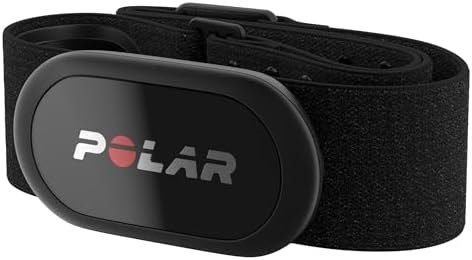 Most Accurate
Chest-strap accuracy beats every wrist tracker. What serious runners and cyclists actually train with.
Check price on Amazon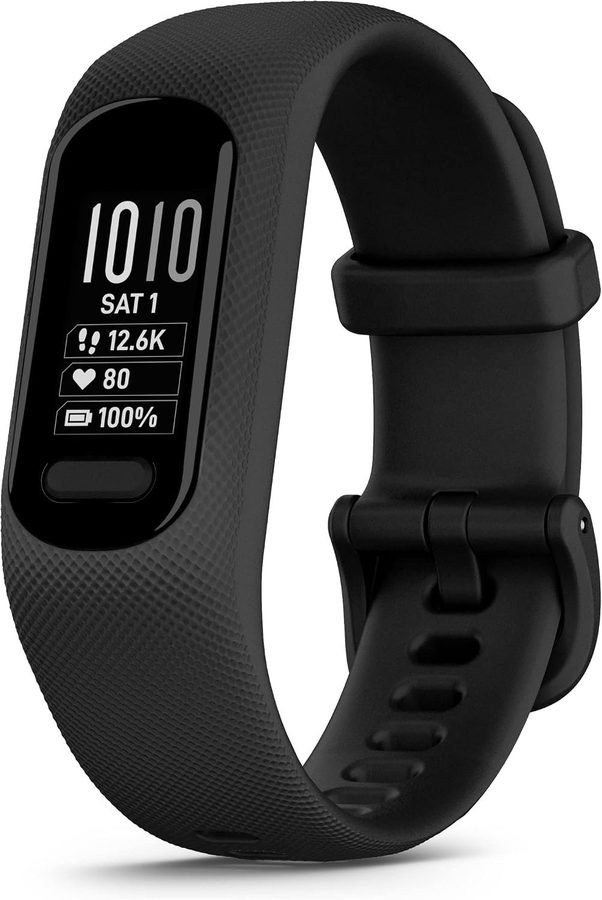
Long battery life and Garmin's running/cycling metrics without a bulky watch body.
Check price on Amazon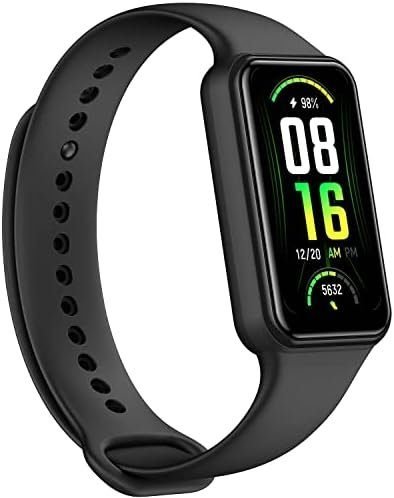 Budget Pick
18-day battery life and a big display for a fraction of the Fitbit/Garmin price. Great starter tracker.
Check price on Amazon