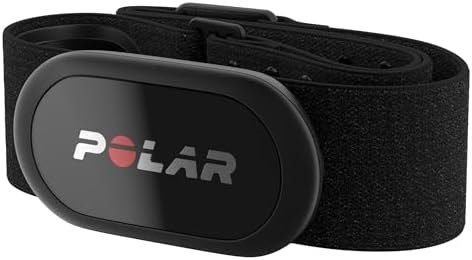
 Most Accurate
Polar H10 Heart Rate Monitor
Chest-strap accuracy beats every wrist tracker. What serious runners and cyclists actually train with.
Check price on AmazonAs an Amazon Associate I earn from qualifying purchases.
Most Accurate
Chest-strap accuracy beats every wrist tracker. What serious runners and cyclists actually train with.
Check price on Amazon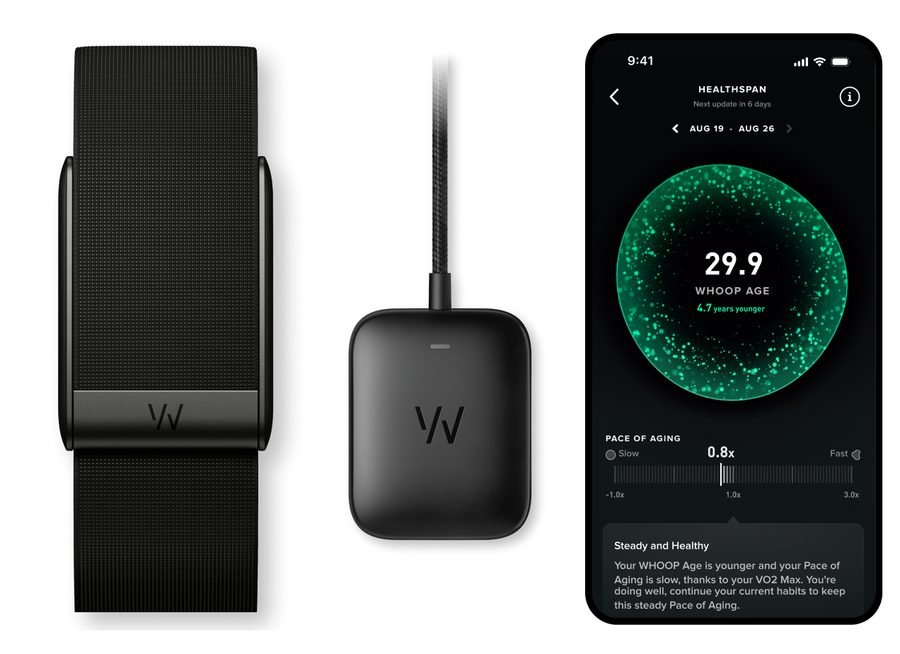
No screen, all data. Tracks HRV, strain, sleep, and recovery. The wearable for people who are serious about optimization.
Check price on AmazonA $85 chest strap against a $239 screenless recovery tracker — compared on accuracy, convenience, and what each one is actually for.
Quick answer: want the most accurate heart-rate number during hard intervals, at a fraction of the price? Polar H10. Want a daily recovery score, strain tracking, and sleep staging with zero chest strap? WHOOP.
| Spec | Polar H10 | WHOOP |
|---|---|---|
| Price | $85, one-time | $239 + ongoing subscription |
| Form factor | Chest strap | Wrist band, screenless |
| Core purpose | Heart-rate accuracy | Recovery, strain, sleep |
| Battery | Coin cell, ~1 year, replaceable | ~4-5 days, rechargeable |
| Connectivity | Bluetooth + ANT+, dual | Bluetooth, app-only |
| Subscription | None | Required for core features |
| Best for | Interval/threshold training accuracy | Daily recovery and overtraining risk |
Prices as of 2026 — WHOOP's subscription cost varies by plan length, confirm current pricing at checkout.
At first glance these seem like an odd pair — one is a $85 chest strap with no screen or app of its own, the other is a $239 wrist device built entirely around a companion app and ongoing subscription. What puts them in the same conversation is that both are frequently the second purchase for someone who already owns a general wrist tracker and wants something deeper: either more accurate real-time heart-rate data during training, or a genuinely dedicated recovery and strain system. They don't really compete for the same buyer's first dollar, but they compete hard for the second one.
The accuracy gap between a chest strap and any wrist-based sensor is real, not marketing. Wrist sensors read heart rate optically through skin and blood flow, which motion, sweat, grip, and skin tone can all disturb — a chest strap reads the heart's actual electrical signal directly, the same method used in medical-grade ECG monitoring. For anyone doing zone-based interval or threshold training where a few beats per minute of error changes how a session should be paced, that accuracy gap is the entire reason to own one. Dual Bluetooth and ANT+ connectivity means it pairs simultaneously with a phone app and gym equipment or another watch, and the coin-cell battery lasting roughly a year removes charging from the list of things you have to remember.
WHOOP isn't trying to be a more accurate heart-rate monitor — it's trying to answer a completely different question: given your recent training load, sleep, and HRV trends, how recovered are you right now, and should you push today or back off? The screenless design keeps the whole experience passive; there's nothing to check compulsively, just a daily recovery score that updates each morning based on overnight data. For anyone training hard enough, often enough, that overtraining is a genuine risk worth actively managing, WHOOP's singular focus on recovery is deeper than anything a chest strap alone can offer, because a chest strap only measures the moment, not the trend.
This is the clearest way to frame what separates these two, and it's worth being explicit about it. The Polar H10 excels at telling you exactly what's happening with your heart rate right now, in this specific set or interval, with medical-grade accuracy. It does not attempt to tell you anything about tomorrow, or how today's session fits into your broader training load. WHOOP does the opposite: it's built almost entirely around trends over days and weeks — HRV baselines, sleep consistency, cumulative strain — and it's genuinely less concerned with the split-second accuracy of a single heart-rate reading during a set. Buying the Polar H10 to understand your overtraining risk would be a mismatch; it simply doesn't collect the kind of longitudinal data WHOOP specializes in. Buying WHOOP to get a precise heart-rate number mid-set is also a mismatch in the other direction — its optical wrist sensor has the same fundamental accuracy limitations as any other wrist-based tracker.
The sticker prices already look different, but the actual gap widens further once you account for WHOOP's mandatory subscription. The Polar H10 is a single $85 purchase with a replaceable coin-cell battery and no recurring cost, ever — buy it once and it works for years. WHOOP's hardware cost is only the entry fee; the subscription is required to access any of the device's core features, and over two to three years that ongoing cost meaningfully exceeds the Polar's one-time price by a wide margin. That doesn't make WHOOP a bad purchase — for the right person, the recovery data changes real training decisions and can be worth the cost — but it does mean these two aren't actually close in total cost of ownership, and that gap deserves more weight in the decision than the initial price tags suggest.
A chest strap is more intrusive to put on than a wrist band — some people never fully get used to a strap around their chest during a workout, though most who use one regularly report it becomes a non-issue within a few sessions. It's also not designed for all-day wear the way WHOOP is; you put the Polar H10 on before a workout and take it off after, while WHOOP is built to be worn continuously, including overnight, since sleep data is central to its recovery scoring. If all-day, every-day wear matters to you, WHOOP's band-based form factor is the more realistic fit; if you only want accurate data during structured training sessions and don't want a device on your body the rest of the day, the Polar H10's workout-only use pattern is arguably the better fit for your lifestyle, not just your budget.
Polar H10: the elastic chest strap loses grip and stretch before the sensor pod itself fails — a slipping strap mid-run or mid-lift is the actual maintenance signal to watch for, and a replacement strap is far cheaper than a new sensor pod. The coin-cell battery is user-replaceable and cheap, unlike a rechargeable pack that degrades permanently over time.
WHOOP: the strap and battery-pack system is the part specific to WHOOP's design — a battery pack slides onto the strap for charging without removing the device, convenient but one more piece of hardware to track. Straps are sold as replacement items and typically need swapping after a year or two of daily wear, especially with heavy sweat exposure. The core sensor pod itself has a solid reliability track record within a normal ownership window.
Skip it if what you actually want is a daily recovery score, sleep staging, or strain tracking across weeks — a chest strap you only wear during workouts has no way to build the kind of overnight, longitudinal data that kind of insight requires. It's also the wrong tool if the idea of a chest strap is a hard no regardless of accuracy; a wrist tracker with lower accuracy but higher daily comfort will get worn consistently, and a more accurate device left in a drawer helps nobody.
Skip WHOOP if precise, real-time heart-rate accuracy during a specific workout is your actual goal — its wrist-based optical sensor has the same fundamental limitations as any other wrist tracker, and it won't outperform a chest strap on that specific measure no matter how much you're paying for the subscription. It's also a poor fit for anyone who isn't training with enough consistency or intensity to generate meaningful strain variance; the recovery score has little to say to someone exercising lightly a couple of times a week.
Winner: depends entirely on what problem you're solving — but the Polar H10 for most people adding a second device to an existing tracker. It solves a specific, real accuracy problem at a fraction of WHOOP's price, with no ongoing cost. Buy WHOOP instead if recovery and overtraining risk is the actual problem — for someone training hard most days, WHOOP's singular focus on that question, and the subscription cost that comes with it, is more directly useful than a more accurate momentary heart-rate reading.
Yes, and it's a genuinely reasonable setup for a serious athlete — the Polar H10 pairs over Bluetooth or ANT+ into WHOOP, a Garmin, a Fitbit, or a third-party app, feeding accurate heart-rate data into whichever device's other metrics (recovery, sleep, notifications) you also want. You get chest-strap accuracy layered on top of whatever ecosystem you're already using rather than having to choose one.
Most people adjust within a handful of sessions, though a chest strap is inherently more noticeable than a wrist band, especially early on or during movements involving a lot of torso flexion. Getting the strap snug but not overly tight, and slightly dampening the electrode area before putting it on, both improve comfort and signal quality.
Opinions genuinely split here — some people find it liberating and less distracting than a screen they'd otherwise check compulsively, while others miss being able to glance at the time or a stat without pulling out a phone. It's worth thinking honestly about which type of user you are before buying specifically for the screenless design.
The Polar H10, for the specific purpose of heart-rate accuracy — wrist-based sensors on WHOOP and similar trackers are least reliable during gripping, wrist-flexing movements common in lifting, while a chest strap's electrical signal reading isn't affected by grip or wrist position at all.
For the full wearables field and how these two fit against Fitbit, Garmin, and Amazfit, see the fitness tracker buyers guide and best fitness wearables for the ranked overview.