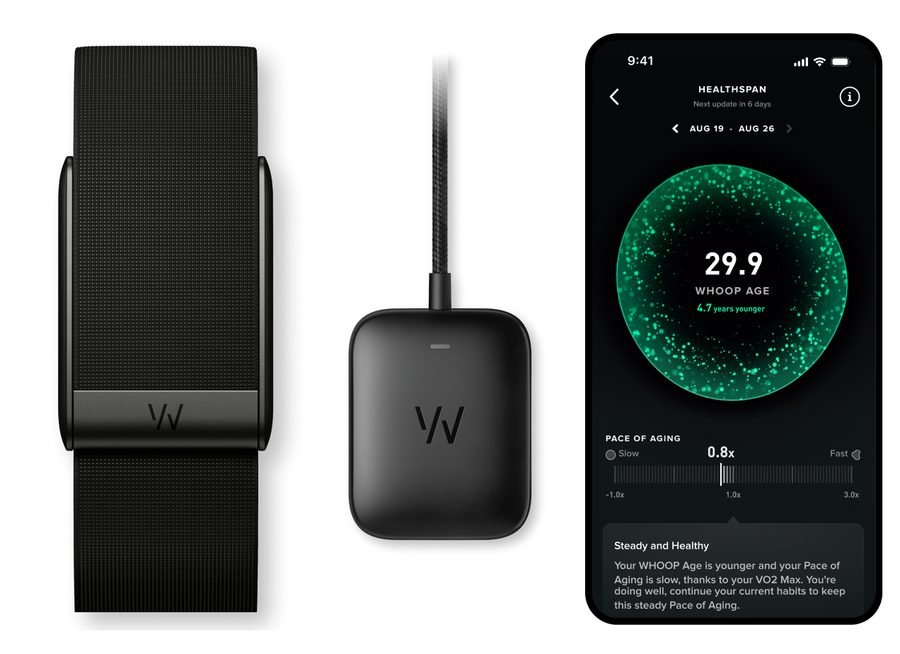
WHOOP Fitness Tracker
No screen, all data. Tracks HRV, strain, sleep, and recovery. The wearable for people who are serious about optimization.
Check price on AmazonAs an Amazon Associate I earn from qualifying purchases.
No screen, all data. Tracks HRV, strain, sleep, and recovery. The wearable for people who are serious about optimization.
Check price on Amazon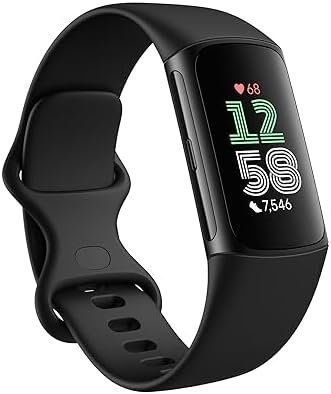 Top Pick
Built-in GPS, heart-rate tracking, and Google apps. The most polished all-day tracker at this price.
Check price on AmazonScreenless recovery tracker vs. all-around smartwatch — compared on data depth, subscription cost, and daily usability.
Quick answer: training hard enough that recovery and overtraining are real concerns, and fine with a subscription? WHOOP. Want one device that also tells time, shows notifications, and works with no ongoing fee? Fitbit Charge 6.
| Spec | WHOOP | Fitbit Charge 6 |
|---|---|---|
| Price | $239 hardware + subscription | $130, one-time |
| Screen | None — app only | Yes, always-on capable |
| Subscription | Required to function | Optional (Premium tier) |
| Battery life | ~4-5 days | ~7 days |
| GPS | No (relies on phone) | Built-in |
| Core focus | Recovery, strain, sleep | All-around fitness + notifications |
| Best for | Serious/frequent trainers | Everyday users wanting one device |
Prices as of 2026 — both brands run periodic promotions, confirm at checkout.
WHOOP and Fitbit Charge 6 sit at almost opposite ends of the wearable design philosophy, which is exactly why people cross-shop them: one is a screenless, subscription-based recovery instrument, the other is a screened, one-time-purchase generalist. Someone who wants "the best tracker" without knowing which specific problem they're solving usually ends up comparing these two because they're both frequently recommended as top picks — just for different reasons and different people.
WHOOP's entire design exists to answer one question every morning: how recovered are you, and should you push hard today or back off? The daily recovery score synthesizes HRV, resting heart rate, sleep quality, and recent strain into a single number that's genuinely useful for anyone training hard enough that overtraining is a real risk. Sleep tracking is a step above what most wrist trackers offer — full sleep-stage breakdown (light, deep, REM) with a coaching layer around it. The lack of a screen isn't a missing feature so much as an intentional design choice: nothing to check compulsively, no notifications pulling your attention, just data that lives in the app when you want to look at it.
The Charge 6 covers the fundamentals — steps, heart rate, sleep duration, built-in GPS for runs without a phone — in a package that works fully with a one-time purchase, no subscription required for core functionality. Google integration (Maps, Wallet, YouTube Music controls) makes it genuinely useful as a daily companion device beyond fitness tracking specifically. The screen means glanceable stats and notifications without pulling out a phone, which matters more to daily usability than it sounds once you're used to it. For someone who wants one wearable that handles fitness tracking and basic smartwatch functions without an ongoing bill, it's hard to beat at $130.
Strip away the feature lists and the real decision here is whether an ongoing subscription is acceptable to you. WHOOP's membership isn't optional — the hardware is essentially inert without it, since all the actual data and insights live behind the subscription. Over two to three years, that adds up to real money on top of the $239 hardware cost, often exceeding it. Fitbit's core tracking (steps, heart rate, sleep, GPS runs) works completely without any subscription; Fitbit Premium exists as an optional add-on with extra insights and guided programs, but it's genuinely optional in a way WHOOP's membership isn't. If a recurring bill for a wearable is a dealbreaker on principle, that alone settles this comparison in Fitbit's favor regardless of any other feature.
WHOOP is a poor fit for someone who just wants a glanceable everyday tracker — there's no screen, so checking your stats means pulling out your phone every time, and if you're the kind of person who wants time and notifications on your wrist, WHOOP simply doesn't do that job. Fitbit, on the other hand, doesn't have anything close to WHOOP's depth of recovery and strain analysis — the Charge 6 tracks heart rate and sleep duration well, but it's not built around a daily "should I train hard today" coaching layer the way WHOOP is. Buying WHOOP hoping for a smartwatch, or buying Fitbit hoping for elite-level recovery coaching, both lead to disappointment for reasons baked into the fundamental design of each device.
Fitbit's roughly 7-day battery life beats WHOOP's 4-5 days on paper, but the practical experience differs more than the numbers suggest. WHOOP charges via a slide-on battery pack that you wear while the strap stays on your wrist — a clever solution that means the device technically never comes off, even during charging, which matters if continuous 24/7 wear (including through charging windows) is important to your data continuity. Fitbit requires removing the device to charge on its dock, which is a brief but real gap in continuous tracking, particularly overnight if you charge it then. Neither approach is objectively better — it depends whether continuous-wear data integrity or simpler charging logistics matters more to you.
Both devices see gradual battery capacity loss with daily charge cycles — expect somewhat shorter runtime between charges on either after 18-24 months versus day one, which is normal lithium battery wear, not a defect on either brand's part. Fitbit's silicone band is a genuine wear item that can crack or discolor with heavy sweat exposure over time; replacement bands are sold separately and are a normal part of ownership, not a sign of a defective unit. WHOOP's strap fabric wears in a similar way with heavy daily use, and WHOOP also sells replacement bands. Neither device has a well-documented pattern of the core sensor or electronics failing under normal use within a typical ownership period — battery and band wear are the realistic long-term costs to plan for on either side.
Both devices use wrist-based optical heart-rate sensors, which means both share the same fundamental limitation compared to a chest strap — motion artifacts, tattoos, and certain skin tones can all introduce measurement noise. Where they diverge is in how much processing and interpretation sits on top of the raw sensor data. WHOOP's algorithm is heavily tuned around detecting subtle overnight HRV trends for its recovery score, which requires consistent overnight wear to build an accurate personal baseline — the score genuinely gets more useful the longer you've worn it, since it's comparing you against your own trend, not a generic population average. Fitbit's heart-rate tracking is solid for general zone-based training and daily resting heart rate trends, but it isn't built around the same kind of longitudinal personal-baseline modeling WHOOP specializes in. Neither is "more accurate" in a simple sense — they're optimized for different questions.
WHOOP's onboarding takes longer to feel useful than Fitbit's, and that's by design rather than a flaw — the recovery score needs roughly a week of consistent overnight wear to establish your personal baseline before it starts producing genuinely calibrated numbers. Buyers expecting immediate, obviously actionable insights on day one are sometimes disappointed; the real value shows up in week two and beyond, once there's enough personal data for the algorithm to compare against. Fitbit's value is more immediate — steps, heart rate zones, and sleep duration are useful from the very first day, with less of a ramp-up period, because it's not trying to build the same kind of individualized physiological baseline WHOOP is.
WHOOP has built a genuine coaching layer into its app over successive versions — AI-driven suggestions, journal entries you can correlate against your recovery and sleep data (tracking things like alcohol, late meals, or stress and seeing how they show up in your numbers over time), and a real emphasis on behavior change, not just data display. Fitbit's app is more oriented around tracking and light gamification — challenges, badges, step competitions with friends — which appeals to a different kind of motivation than WHOOP's data-correlation approach. Neither is objectively better here; it depends whether you're more motivated by understanding cause-and-effect in your own data or by social, game-like fitness tracking.
If you start with Fitbit and later decide you want WHOOP's recovery depth, the switch is straightforward but not free — you're buying new hardware and taking on a subscription you didn't have before, and your historical Fitbit sleep and activity trend data doesn't transfer into WHOOP's app. Going the other direction (WHOOP to Fitbit) means losing access to your recovery history the moment the subscription lapses, since WHOOP's data model is tied to active membership in a way Fitbit's isn't. Neither switch is difficult logistically, but it's worth knowing upfront that historical data doesn't follow you between these two ecosystems if you're not sure which one you'll want long-term.
Winner: depends entirely on training intensity and subscription tolerance — but for most people, Fitbit Charge 6. It covers real fitness tracking fundamentals with no ongoing cost, built-in GPS, and a screen that makes it useful as an everyday device beyond workouts. Buy WHOOP instead if you train hard enough, frequently enough, that knowing your recovery status genuinely changes your training decisions day to day — for that specific person, WHOOP's subscription cost is justified by data depth nothing else on this comparison offers, and the lack of a screen is a feature, not a limitation.
Not for meaningful use — WHOOP's core recovery, strain, and sleep features all live behind an active membership, so a lapsed subscription leaves the strap effectively non-functional as a tracker rather than dropping back to basic step counting.
It's solid for pace and distance on typical runs, though dedicated running watches with more sensitive GPS chipsets can be marginally more precise on winding trails or dense urban routes with lots of turns. For most road and treadmill running, the Charge 6's GPS is accurate enough to trust.
It tracks strength sessions and factors them into strain scoring, but its deepest insight remains recovery and overall load rather than per-lift performance metrics — it won't tell you about bar speed or rep quality the way a dedicated strength-tracking tool might, only how the session affected your overall recovery need.
For the full field of wearables including budget and mid-range options, see best fitness wearables and the fitness tracker buyers guide for how to match a tracker to your specific training style.