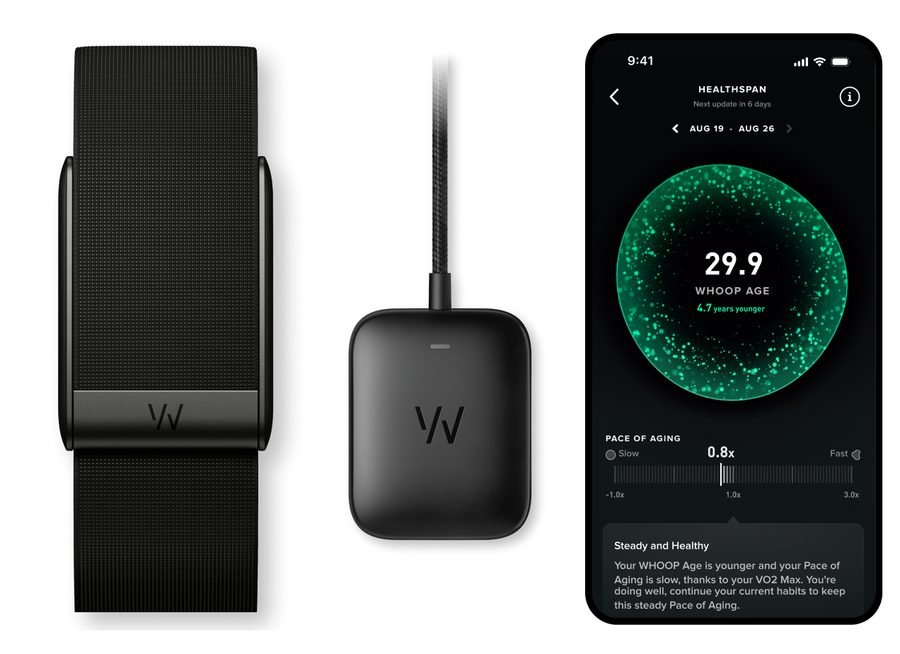
WHOOP Fitness Tracker
No screen, all data. Tracks HRV, strain, sleep, and recovery. The wearable for people who are serious about optimization.
Check price on AmazonAs an Amazon Associate I earn from qualifying purchases.
GPS watches, heart-rate monitors, and fitness trackers compared on what matters.
Fitness wearables split into two categories that get compared as if they're the same thing, and they're not:
The right pick depends on which of those three you actually want, not which one has the most features listed on the box. A common and expensive mistake is buying the one with the longest spec sheet — a device stuffed with features you'll check twice and then ignore is worse value than a simpler tracker that answers the one question you actually care about, whether that's "did I sleep enough," "am I overtraining," or "what was my pace on that run."
No screen, all data lives in the app: HRV, strain, sleep stages, and a daily recovery score that tells you whether to push or back off. This is the pick for anyone whose real question is "am I overtraining" rather than "what time is it" — WHOOP is built entirely around that one question and doesn't try to also be a smartwatch. Requires a subscription alongside the hardware, which is the tradeoff for going all-in on recovery data. Battery life runs 4-5 days per charge, topped up via a slide-on battery pack you wear while charging so the strap never has to come off — a clever fix for a screenless device with no clock, but one more accessory to keep track of. Wrong for anyone who wants their fitness data free after the initial purchase: the subscription is not optional and cancelling stops the app from showing anything beyond a lock screen. What breaks after a year: the clasp on the strap band is the most common wear point — WHOOP sells replacement bands separately, which is the honest sign the strap itself is treated as consumable.
Built-in GPS, continuous heart-rate tracking, and Google apps baked in, at less than half the price of the wearables built for serious endurance training. The most polished, easiest-to-use option here for someone who wants steps, sleep, workouts, and phone notifications in one device without a learning curve. Roughly 7 days of battery with GPS use trimming that down on workout-heavy weeks. The AMOLED display is bright enough for outdoor use in direct sun, which cheaper trackers often struggle with. Wrong for anyone chasing serious running or cycling metrics specifically — Fitbit's data is broad and easy to read but shallower than Garmin's on pace zones, training load, and recovery modeling. What breaks after a year: the band's quick-release pins are the common failure point, not the tracker body itself — a $10 replacement band fixes it rather than needing a whole new unit.
Garmin's running and cycling metrics (pace, cadence, training status) in a slim tracker body rather than a bulky GPS watch. The pick if you're training for a specific event and want Garmin's data depth without the size and price of Garmin's full sport-watch line. Body Battery energy monitoring and Garmin's training-status algorithm (which tells you if you're "productive," "overreaching," or "detraining") are genuinely more sophisticated than what Fitbit or Amazfit offer at this price. Battery runs about 7 days without heavy GPS use. Wrong for anyone who wants a large, easy-to-read display — the slim tracker form factor trades screen size for a slimmer wrist profile, and the text is noticeably smaller than a Fitbit or a dedicated GPS watch.
A chest strap beats every wrist-based sensor for heart-rate accuracy, full stop — wrist trackers estimate through skin and motion artifacts, a chest strap reads the electrical signal directly. The pick for anyone doing zone-based training (intervals, threshold work) where a wrist tracker's few-beats-off reading actually matters to the workout. Bluetooth and ANT+ dual connectivity means it pairs with gym equipment, other fitness apps, and a phone simultaneously — a real advantage over wrist trackers locked to one app ecosystem. Coin-cell battery lasts roughly a year of regular use and is user-replaceable, unlike every rechargeable wearable on this list. Wrong for daily, all-day wear — nobody wears a chest strap to sleep or through a workday; it's a during-workout tool, not a 24/7 tracker. What breaks after a year: the elastic strap loses stretch and grip before the sensor pod does, so a slipping strap during a run is the wear signal to buy a replacement band, not a whole new unit.
18-day battery life and a display large enough to actually read, at a fraction of the Fitbit/Garmin price. The honest starting point if you're not sure a wearable will stick as a habit yet, or want a backup/gift-tier tracker rather than your primary one. Covers the basics competently — steps, sleep, heart rate, workout modes — without Garmin's training-load depth or WHOOP's recovery scoring. Wrong for anyone training for a specific race or event where pacing data actually needs to be trustworthy; treat the Amazfit's numbers as directionally useful, not precise enough to plan splits around.
| Product | Price | Screen | Best for |
|---|---|---|---|
| WHOOP | $239 (+ subscription) | None | Recovery and training-load tracking |
| Fitbit Charge 6 | $130 | Yes | All-around daily use, easiest to start with |
| Garmin Vivosmart 5 | $150 | Yes | Running/cycling metrics in a slim body |
| Polar H10 | $85 | None (chest strap) | Most accurate heart rate, zone training |
| Amazfit Band 7 | $40 | Yes | Budget entry point, longest battery life |
Bands and straps are the first thing to wear out across every wearable here — clasps loosen, elastic stretches, quick-release pins wear — and every brand in this list sells replacement bands separately rather than requiring a full new unit. The tracker body itself is usually the last thing to fail; battery capacity degrading gradually over 2-3 years of daily charge cycles is the most common reason people eventually replace the whole device, not a broken sensor or screen.
Only WHOOP requires one — the hardware itself is effectively a rental of the platform, and the subscription is where the recovery scoring and coaching live. Fitbit, Garmin, Polar, and Amazfit all work fully with a one-time hardware purchase, with optional paid tiers for extra features.
Yes, meaningfully. Wrist sensors use light (photoplethysmography) through skin and blood flow, which motion and skin tone can throw off. A chest strap reads the heart's electrical signal directly, the same method used in medical-grade monitors, which is why serious runners and cyclists still wear one under a smartwatch.
You can, but you'll want your phone nearby for anything time-of-day related — no screen means no glance-at-your-wrist clock, notifications, or workout stats mid-session. It's built specifically for the recovery/strain use case, not as a general smartwatch replacement.
The Amazfit Band 7 leads at 18 days on a charge. GPS-heavy use (Garmin, continuous outdoor runs) drains any of these faster — expect closer to 5-7 days on the Fitbit and Garmin with regular GPS workouts.
If you always run or ride with your phone, you don't strictly need onboard GPS. It matters most for runners who leave the phone at home — Fitbit Charge 6 and Garmin Vivosmart 5 both track distance and pace without a phone nearby; WHOOP and the Polar strap do not have GPS at all.
Yes, and plenty of serious athletes do — the Polar H10 pairs over Bluetooth or ANT+ to feed accurate heart-rate data into a Garmin, Fitbit, or third-party training app, so you get chest-strap accuracy alongside your wrist tracker's other metrics (steps, sleep, notifications) instead of choosing one or the other.
For a longer walk through which tracker fits which training style, see our fitness tracker buyers guide. If you're deciding directly between two of these, our WHOOP vs. Garmin, WHOOP vs. Fitbit, Fitbit vs. Garmin, WHOOP vs. Polar H10, and Amazfit Band 7 vs. Fitbit Charge 6 comparisons go deeper on those specific matchups.
No screen, all data. Tracks HRV, strain, sleep, and recovery. The wearable for people who are serious about optimization.
Check price on Amazon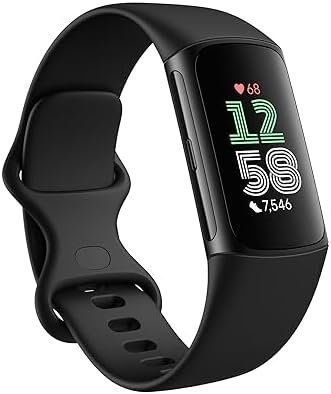 Top Pick
Built-in GPS, heart-rate tracking, and Google apps. The most polished all-day tracker at this price.
Check price on Amazon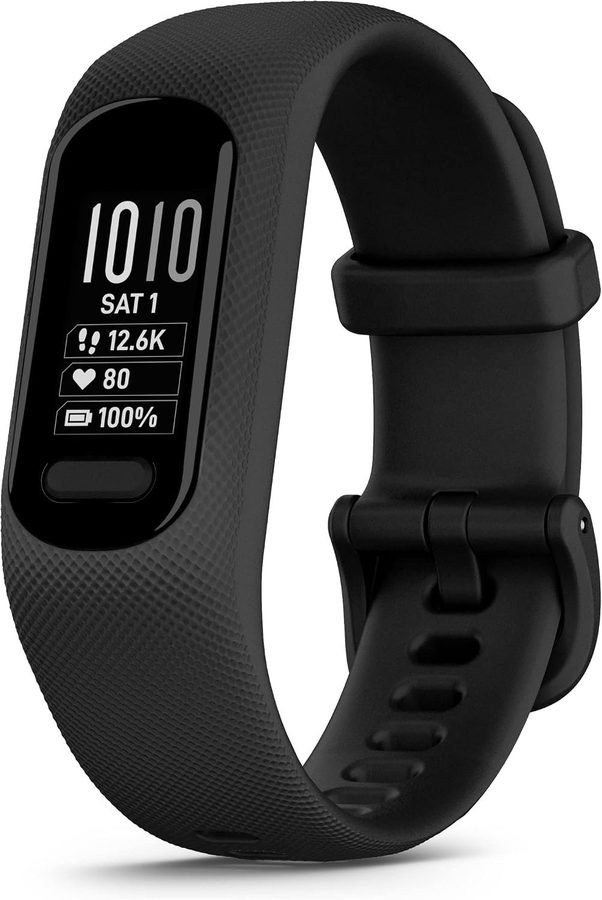
Long battery life and Garmin's running/cycling metrics without a bulky watch body.
Check price on Amazon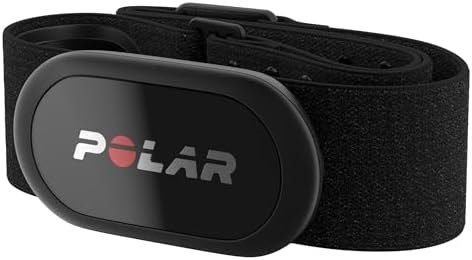 Most Accurate
Chest-strap accuracy beats every wrist tracker. What serious runners and cyclists actually train with.
Check price on Amazon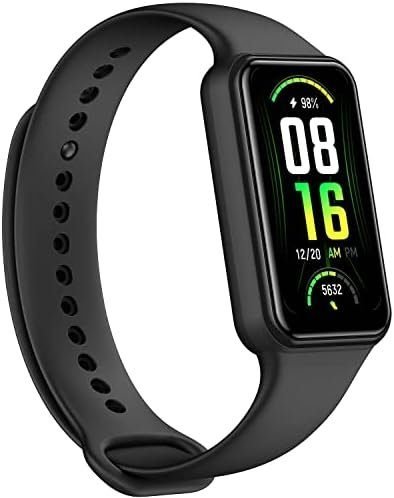 Budget Pick
18-day battery life and a big display for a fraction of the Fitbit/Garmin price. Great starter tracker.
Check price on Amazon