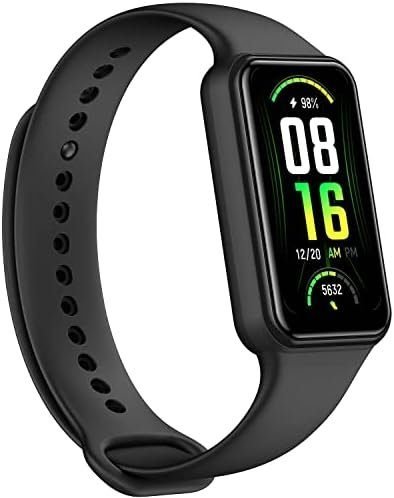
 Budget Pick
Amazfit Band 7
18-day battery life and a big display for a fraction of the Fitbit/Garmin price. Great starter tracker.
Check price on AmazonAs an Amazon Associate I earn from qualifying purchases.
Budget Pick
18-day battery life and a big display for a fraction of the Fitbit/Garmin price. Great starter tracker.
Check price on Amazon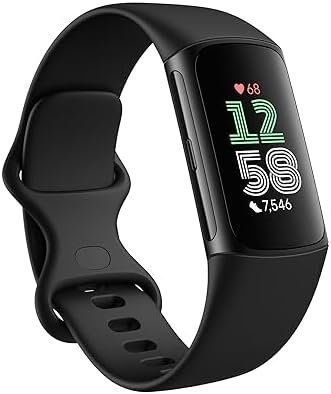 Top Pick
Built-in GPS, heart-rate tracking, and Google apps. The most polished all-day tracker at this price.
Check price on AmazonA $40 band with 18-day battery against a $130 GPS tracker with Google integration — compared for the budget-conscious buyer.
Quick answer: want to spend as little as possible while still getting real activity and sleep tracking? Amazfit Band 7. Want built-in GPS, a more polished app, and don't mind paying three times as much? Fitbit Charge 6.
| Spec | Amazfit Band 7 | Fitbit Charge 6 |
|---|---|---|
| Price | $40 | $130 |
| Battery life | ~18 days | ~7 days (less with GPS use) |
| Built-in GPS | No | Yes |
| Screen | Yes, basic color display | Yes, color touchscreen |
| App ecosystem | Zepp (basic) | Google (Maps, YouTube Music) |
| Subscription | None | Optional (Fitbit Premium) |
| Workout modes | Basic set | Broader, more detailed |
Prices as of 2026 — both fluctuate with promotions, confirm at checkout.
These sit at opposite ends of the mainstream tracker market, and they get compared constantly precisely because of that gap — someone deciding between a $40 band and a $130 tracker wants to know exactly what they're giving up for the savings, not just that one is "cheaper." The honest answer is that the Amazfit covers the fundamentals competently and the Fitbit adds real, tangible features on top — the question is whether those specific features are worth three times the price for your situation.
18 days of battery life is the headline feature, and it's not a marginal edge — it's roughly two and a half times longer than the Fitbit's roughly week-long battery, which removes charging-related device abandonment almost entirely. Steps, sleep, heart rate, and basic workout modes all work competently for a fraction of the Fitbit's price, without pretending to compete on GPS or advanced training metrics it was never built to offer. For someone who isn't sure a wearable habit will actually stick, or who wants a low-risk first tracker or a gift-tier device, the Amazfit removes most of the financial risk of the experiment.
Built-in GPS is the single biggest practical upgrade — head out for a run or ride without a phone and still get an accurate route, pace, and distance, something the Amazfit simply can't do on its own. Google's ecosystem integration (Maps, YouTube Music controls) adds genuine daily utility beyond fitness tracking specifically. The larger, more refined touchscreen and Fitbit's longer-developed app make for a noticeably more polished day-to-day experience, and workout mode variety and detail are meaningfully deeper than the Amazfit's more basic set.
This is worth dwelling on because it's not just a spec-sheet number — it changes how reliably you actually wear the device. A device you have to remember to charge every week is a device that occasionally sits dead in a drawer for a few days after you forget one charging cycle, and those few days are disproportionately how people quietly stop wearing a tracker altogether. The Amazfit's 18-day battery all but removes that failure mode; you charge it roughly monthly and largely stop thinking about it. The Fitbit's week-long battery (shorter with regular GPS use) demands an actual habit — charging during a shower or while getting ready in the morning works well for most people, but it's a real behavior you have to maintain, not something you can forget about for weeks at a time.
If you never run or ride without your phone, built-in GPS matters far less than the spec sheet suggests — you can track a route with a phone app regardless of which tracker is on your wrist. GPS earns its place specifically for runners and cyclists who want to leave the phone behind: lighter setup, no bouncing phone in a pocket or armband, no risk of a dead phone battery cutting a run's data short. If that's a real, recurring situation for you, the Fitbit's built-in GPS alone can justify a meaningful chunk of the price gap. If you always run or ride with your phone anyway — for music, safety, or habit — this specific advantage matters much less in practice, and the Amazfit's savings look better by comparison.
Fitbit's app is more refined by a wide margin — years of iteration, a larger feature set, and Google's ecosystem integration for Maps and music controls that go beyond pure fitness tracking. Amazfit's Zepp app covers the basics (steps, sleep, heart rate trends, workout history) reasonably well but doesn't attempt the same depth or polish, and there's no equivalent to Fitbit's broader smart-band ambitions. For someone who wants their wearable to double as a lightweight daily companion device — checking notifications, controlling music, getting turn-by-turn directions — the Fitbit's app ecosystem is doing real work the Amazfit doesn't attempt to replicate.
Amazfit Band 7: at this price point, the band material and clasp are the most likely wear points, and Amazfit sells replacement bands for exactly that reason. Battery capacity degrades gradually like any rechargeable device, though the long baseline runtime means you'll likely notice it less than on a shorter-battery device, since even a degraded battery still lasts well over a week. The core tracker electronics have a reasonable reliability track record for the price, without a well-documented pattern of early failure.
Fitbit Charge 6: the silicone band is the first thing to show wear, particularly around the buckle, and Fitbit sells replacement bands separately as the honest acknowledgment that the strap is a wear item. Battery capacity, like any rechargeable device, fades over 2-3 years of daily charge cycles — expect the quoted week-long battery life to shrink noticeably by that point, which matters more here than on the Amazfit precisely because the starting battery life is shorter to begin with.
Fitbit's workout mode library covers a genuinely wider range of activities with more detailed per-activity metrics — pace zones for running, stroke tracking for swimming, and more granular heart-rate zone breakdowns during structured training. The Amazfit covers the common cases (running, walking, cycling, basic strength tracking) but with less depth once you're inside a given workout mode, and fewer of the more specific sport modes some other trackers include. For someone doing varied training — a mix of running, lifting, and the occasional swim — the Fitbit's broader and deeper mode selection shows up more the more varied your training actually is; for someone doing the same one or two activities consistently, the gap matters much less.
Skip it if you specifically need phone-free GPS tracking for runs or rides, or if you want deep training-load metrics and a broader workout mode selection — the Amazfit's basic feature set is a real limitation for anyone training with structure and specific pace or distance goals, not just casual daily activity tracking.
Skip the Fitbit if budget is a genuine constraint and your use case is casual daily activity tracking without a need for GPS or deep training data — paying three times as much for features you won't meaningfully use is money better spent elsewhere, and the Amazfit covers the fundamentals competently enough that the extra spend wouldn't change your day-to-day experience much.
Winner: depends on budget and whether you need GPS — but the Amazfit Band 7 is the better value for most casual users. It covers steps, sleep, and heart rate competently at less than a third of the Fitbit's price, with dramatically better battery life. Buy the Fitbit Charge 6 instead if phone-free GPS, a more polished app, and Google ecosystem integration are things you'll actually use regularly — for a runner or cyclist training toward a goal, those features are worth the extra cost.
Yes, for general trend-tracking purposes — it won't match a medical device, but neither will the Fitbit, and both are reasonably consistent for tracking your own trends over time, which matters more for most people than absolute precision against a lab standard.
Only by carrying your phone and using a separate running or cycling app for route and pace data — the Amazfit itself has no onboard GPS chip, so there's no way to add phone-free GPS tracking to the device itself.
No — all of its core tracking features work with the free Zepp app, with no subscription tier gating anything essential, which is one of its clearer advantages over the Fitbit's optional-but-present Premium upsell for deeper insights.
It's not just markup — built-in GPS, a more capable app ecosystem, and broader workout mode support are real, tangible differences, not just a nicer badge on the box. Whether they're worth the premium depends entirely on whether you'll actually use those specific features regularly.
The Amazfit Band 7, generally — it's a low financial risk way to find out whether a wearable habit sticks at all, and the battery life means less nagging about charging it. If the habit sticks and specific training needs (GPS, deeper metrics) show up later, upgrading to a Fitbit or Garmin at that point is a well-informed decision rather than a guess.
For the full field of wearables including WHOOP and Garmin, see the fitness tracker buyers guide and best fitness wearables for the ranked overview.