 Top Pick
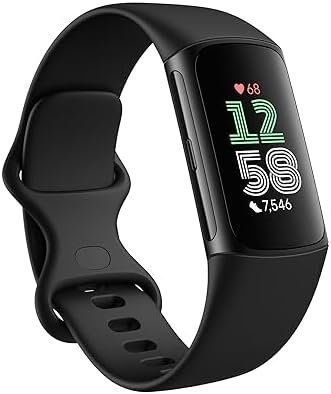
Fitbit Charge 6
Built-in GPS, heart-rate tracking, and Google apps. The most polished all-day tracker at this price.
Check price on AmazonAs an Amazon Associate I earn from qualifying purchases.
Top Pick
Built-in GPS, heart-rate tracking, and Google apps. The most polished all-day tracker at this price.
Check price on Amazon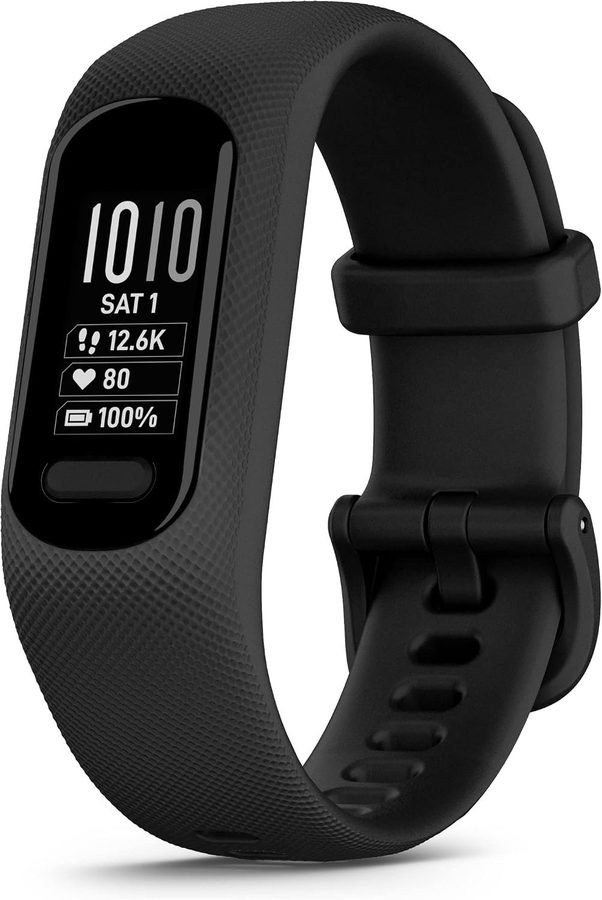
Long battery life and Garmin's running/cycling metrics without a bulky watch body.
Check price on AmazonTwo slim fitness trackers compared on running data depth, app ecosystem, and everyday usability.
Quick answer: want the most polished all-around app and Google integration? Fitbit Charge 6. Training seriously for a running or cycling goal and want real training-load data? Garmin Vivosmart 5.
| Spec | Fitbit Charge 6 | Garmin Vivosmart 5 |
|---|---|---|
| Price | $130 | $150 |
| Screen | Larger, easier at-a-glance reading | Slimmer, smaller display |
| GPS | Built-in | Built-in |
| Battery life | ~7 days | ~7 days |
| Training metrics | Basic zones, active minutes | Training status, Body Battery, cadence |
| App ecosystem | Google (Maps, Wallet) | Garmin Connect |
| Subscription | Optional (Premium) | None |
| Best for | All-around daily use | Runners/cyclists wanting real data |
Prices as of 2026 — both brands run periodic promotions, confirm at checkout.
Both are slim, screen-equipped trackers in a similar price band with built-in GPS — the two most-recommended "all-around" fitness trackers that aren't full smartwatches. The comparison usually comes down to one question: do you want the more polished, generalist daily-use device, or the one with genuinely deeper training data underneath a smaller screen?
Google's ecosystem integration — Maps for turn-by-turn without a phone in hand, Wallet for tap-to-pay, YouTube Music controls — makes the Charge 6 more useful as a daily companion device beyond pure fitness tracking. The larger, easier-to-read display and Fitbit's long-refined, beginner-friendly app make it the lower-friction choice for someone who wants solid tracking without digging into advanced training metrics. It remains the most common recommendation for "first real fitness tracker" for exactly this reason — nothing about it requires understanding sports-science terminology to get value on day one.
Garmin's training-status algorithm — telling you whether you're "productive," "peaking," "overreaching," "recovering," or "detraining" based on recent training load and recovery — is genuinely more sophisticated than anything at a similar price point from Fitbit. Body Battery, Garmin's proprietary energy-tracking metric, synthesizes sleep, stress, and activity into a single number that's a useful proxy for whether you're actually ready for a hard session. For runners and cyclists specifically, cadence and more detailed pace data give a clearer picture of a workout than Fitbit's more general zone tracking. All of this comes in a genuinely slim form factor, packed into a device that costs about the same as the Fitbit.
Garmin's decision to keep the Vivosmart 5 slim means a noticeably smaller display than Fitbit's Charge 6 — legible, but not built for glancing at multiple stats quickly the way a bigger screen is. This is a real usability tradeoff, not a minor spec footnote: people who check their tracker frequently throughout the day (steps, time, notifications) tend to prefer Fitbit's larger screen, while people who mainly care about a quick post-run summary and don't need constant glanceability lean toward accepting Garmin's smaller display in exchange for the deeper training data underneath it.
Fitbit's approach to training data is intentionally simple — heart-rate zones, active zone minutes, and general daily activity trends, aimed at the broadest possible audience without requiring sports-science background to interpret. Garmin's training-status and Body Battery metrics are built for people who actually want to structure training around the data — knowing whether today is a good day to push hard or better to back off, based on an algorithm digesting your recent training load and recovery signals. Neither approach is "better" in the abstract — Fitbit's simplicity is exactly right for someone who doesn't want to think hard about their tracker, and Garmin's depth is exactly right for someone actively managing a training plan around a specific event or goal.
This matters more over time than it seems on day one. Fitbit's Google integration means your data and account tie into the broader Google ecosystem — useful if you're already deep in Google's products, less relevant if you're not. Garmin Connect is its own dedicated fitness platform, generally considered one of the most complete and long-standing fitness data ecosystems, with broad third-party app compatibility for training plans and analysis tools built around exported Garmin data. If you already own other Garmin devices (a bike computer, a bigger sport watch), the Vivosmart 5 slots into that existing ecosystem seamlessly in a way switching between brands never quite replicates.
Both trackers see gradual battery capacity loss with daily charge cycles — expect somewhat shorter runtime between charges on either after 18-24 months of regular use, which is normal and not a defect. Both sell replacement bands separately, which is the honest signal from both companies that the strap is a wear item, not a lifetime part — silicone bands on both crack or discolor with heavy sweat exposure over a year or two of daily wear. Neither has a well-documented pattern of the core tracker or GPS module simply failing under normal use within a typical ownership period.
Both use wrist-based optical heart-rate sensors, and both perform reasonably well during steady-state cardio like walking, running, or cycling at a consistent pace. Where wrist sensors on either device get less reliable is during high-intensity interval work with a lot of wrist movement, or during resistance training where gripping a bar or dumbbell affects blood flow readings at the wrist. Neither Fitbit nor Garmin has a documented, meaningful accuracy edge over the other in independent testing at this price point — if precise heart-rate data during intervals or heavy lifting genuinely matters to your training, a chest strap paired with either tracker (both support pairing external heart-rate monitors) closes that gap regardless of which wrist device you choose.
Fitbit's sleep tracking includes a sleep score, stage breakdown (light, deep, REM), and a "sleep profile" feature that categorizes your typical sleep pattern against broader benchmarks over time — approachable and easy to understand without much interpretation required. Garmin's sleep tracking is similarly detailed, feeding into the broader Body Battery metric so sleep quality visibly affects your daily energy score rather than sitting as a separate, disconnected data point. This is one of the more meaningful practical differences: Garmin explicitly ties sleep into a single daily-readiness number, while Fitbit presents sleep and daily activity as more separate categories you interpret yourself. Neither is more "accurate," but Garmin's integrated approach appeals more to people who want one number to check each morning, and Fitbit's separated approach appeals to people who want to look at sleep and activity independently.
Fitbit leans further into smartwatch territory for a tracker at this price — phone notifications, Google Wallet tap-to-pay, and music app controls give it more day-to-day utility beyond fitness specifically. Garmin's Vivosmart 5 supports basic notifications too, but the overall experience is more fitness-first and less oriented around replacing daily smartphone interactions. If part of what you want from a wearable is fewer reasons to pull out your phone during the day, Fitbit's deeper feature set there is a genuine point in its favor; if you specifically don't want a device pulling double duty as a mini-smartwatch, Garmin's more focused approach avoids notification clutter you didn't ask for.
At $130 versus $150, the gap between these two is modest enough that price alone rarely decides the comparison — the $20 difference is worth less consideration than which specific feature set (Fitbit's ecosystem and screen, or Garmin's training data and Connect integration) actually matches how you plan to use the device day to day. Both are positioned by their respective brands as the accessible, slim entry point into their broader wearable lineups, and both hold their value reasonably well on the used market given consistent ongoing brand support and software updates.
Winner: depends on what you actually want the data for — but Fitbit Charge 6 for most people. It's the lower-friction, more broadly useful daily device, with a bigger screen and genuinely useful Google integration, at a slightly lower price. Buy the Garmin Vivosmart 5 instead if you're training toward a specific running or cycling goal and want training-status and Body Battery data that actually informs day-to-day training decisions — for that specific use case, Garmin's data depth is worth the smaller screen.
The Fitbit Charge 6, generally — the larger screen, simpler app, and broader Google integration make it the lower-friction choice for someone who hasn't used a dedicated fitness tracker before and doesn't yet know which specific training metrics they'll care about.
It's genuinely useful for anyone following a structured training plan — the algorithm digests your recent training load and recovery trends into a status (productive, peaking, overreaching, etc.) that can meaningfully inform whether to push a session or back off. For someone doing unstructured, casual exercise, the feature is less impactful simply because there's less of a specific plan for it to evaluate against.
Both require an initial smartphone pairing for setup and to sync data to their respective apps, and both retain GPS and heart-rate tracking on-device during a workout even without the phone present. Neither functions as a fully phone-independent device for ongoing use, since both rely on the paired app for full data history and insights.
Both are water resistant and support swim tracking, though neither is positioned as a dedicated swim watch with the depth of metrics a swim-specific Garmin device offers. For casual pool laps, either covers the basics; serious swimmers chasing detailed stroke and pace data would be better served by a dedicated swim-focused device from either brand's higher-tier lineup.
Fitbit's app is generally considered more approachable for a general audience — cleaner presentation, less jargon. Garmin Connect is a more powerful, feature-dense app that rewards a bit of a learning curve with genuinely deeper data and analysis options once you're comfortable navigating it.
Only if you're actively training toward a specific goal where that data would change your day-to-day decisions — if you're using your current Fitbit casually and it's serving you fine, the switch cost (new hardware, re-learning an app, losing historical Fitbit data) usually isn't worth it just for features you may not actively use.
For the full ranked wearables field, see best fitness wearables, and for how to match a tracker to your specific training style, see the fitness tracker buyers guide.