Theragun Mini (3rd Gen)
Portable percussion massager. 3 speeds, 150 min battery. Fits in your gym bag. Actually worth the hype.
Check price on AmazonAs an Amazon Associate I earn from qualifying purchases.
Portable percussion massager. 3 speeds, 150 min battery. Fits in your gym bag. Actually worth the hype.
Check price on Amazon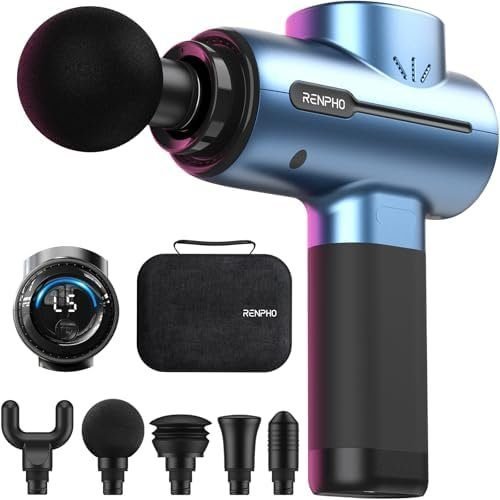 Budget Pick
Percussion therapy at a third of the Theragun price. Multiple heads for back, legs, and shoulders.
Check price on Amazon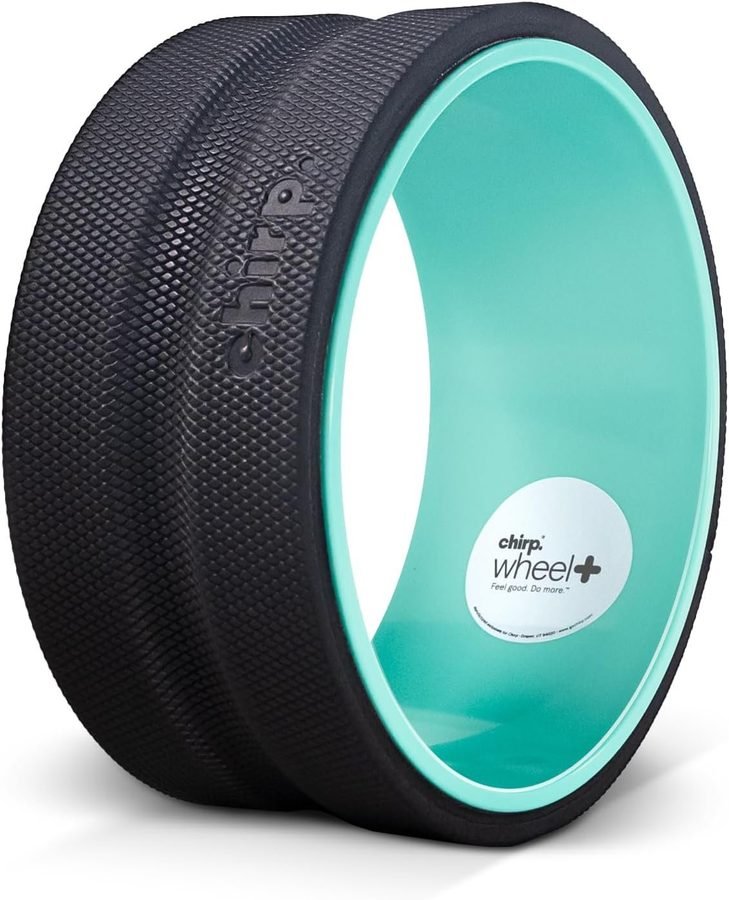
Rounded wheel that stretches and rolls your back at once. Genuinely different from a flat foam roller.
Check price on Amazon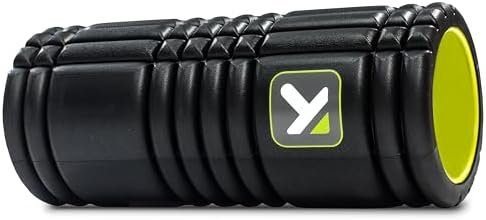 Best Seller
Multi-density foam that holds its shape for years. The foam roller physical therapists actually recommend.
Check price on AmazonA massage gun is a percussion device that pushes blood through tight tissue and temporarily reduces the feeling of soreness. That is a real effect and a modest one. It will not repair muscle damage, flush lactic acid (which cleared on its own within an hour of your session), or replace sleep. What it does reliably is make the next session possible when you are stiff, which is the only recovery metric that matters.
Prices in this category run from $40 to $600 for devices that look identical. Three specs explain almost all of that gap.
Stall force — how much pressure the head takes before the motor stops. This is the number cheap guns are worst at and the one you feel immediately. Under about 20 lbs, the device stalls the moment you lean into a quad or a glute, which is exactly where you need it. Around 30–40 lbs is enough for anybody who is not a therapist working on somebody else.
Amplitude — how far the head travels, usually 10–16 mm. Bigger amplitude reaches deeper tissue; smaller amplitude is a surface vibration. A budget gun advertising a huge motor speed and a 6 mm stroke is a vibrator, not a percussion device.
Noise — measured in decibels, and the reason a gun gets used or abandoned. Under about 55 dB you can use it while watching something. Over 70 dB it sounds like a power tool and it lives in a drawer.
Speed settings ("30 speeds!") are marketing. Nobody uses more than two, and no research supports one frequency over another.
The premium in this category buys a quieter brushless motor, a higher stall force, and a build that survives being dropped. It does not buy a different biological effect. A $50 gun with 30 lbs of stall force and a 12 mm stroke does the same job to your hamstring as a $400 one — it is louder, heavier, and its battery dies sooner.
So the honest advice splits by use:
A massage gun is not the highest-value recovery purchase for most people. Ranked by soreness removed per dollar:
A foam roller (around $25) covers more surface area per minute than any gun and works the large muscles — quads, hamstrings, lats, upper back — where most training soreness lives. It is slower and more uncomfortable. It also never needs charging and cannot break.
A back/spine roller wheel ($40ish) does one thing a gun and a standard roller both do badly: extend a spine that has been flexed forward all day at a desk. If your complaint is a stiff upper back rather than sore legs, this is the better buy.
A lacrosse or massage ball (under $15) beats everything for precision — glute medius, the sole of the foot, the exact knot next to a shoulder blade. A gun head is too broad for those spots.
Sleep, food and a walk cost nothing and outperform the entire category. That sentence sounds like a joke on a page selling massage guns; it is the single most supported statement here.
Two minutes per muscle group is the working dose — more is not better and there is no evidence supporting long sessions. Keep it moving rather than pressing hard in one spot, stay off bone and joints, and skip anything sharply painful, which is information rather than tightness.
Before training, use it briefly on the muscles you are about to work; it raises tissue temperature and range of motion for a short window. After training, use it on whatever is tight, whenever it is convenient — the timing effect is small.
If this is your first recovery tool, buy the foam roller and the massage ball first; together they cost less than the cheapest gun and cover more of the body. Add a budget percussion gun when you want the convenience, and only step up to a premium mini if you will carry it every day and the noise genuinely bothers you.
Full ranked list in best recovery tools, and the under-$100 build is in recovery tools under $100. If you are choosing between the two obvious guns, the Theragun Mini vs RENPHO comparison prices both.
For short-term soreness and range of motion, yes — the effect is measurable and modest, and it fades within hours. For actual recovery of muscle tissue, no device does that; food and sleep do. Buy one to feel looser tomorrow, not to recover faster.
Only for noise, stall force and durability. If a $50 gun holds 30 lbs of pressure without stalling and you can stand the sound, it delivers the same treatment. The premium is a comfort purchase, and that is a legitimate reason to spend — just know what you are buying.
Roller first if you are buying one thing. It covers big muscles faster, costs about a fifth as much, and never runs out of battery. The gun wins on convenience, on hard-to-reach spots, and on being usable while sitting down.
Yes, at a couple of minutes per area. Daily use is fine and common. Stop if something is sharply painful, bruises, or is a joint rather than a muscle.
Either. Before, it briefly increases range of motion, which is useful ahead of squats or overhead work. After, it reduces the soreness you feel over the next day or two. Neither timing is dramatically better than the other.