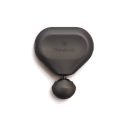
Theragun Mini (3rd Gen)
Portable percussion massager. 3 speeds, 150 min battery. Fits in your gym bag. Actually worth the hype.
Check price on AmazonAs an Amazon Associate I earn from qualifying purchases.
Portable percussion massager. 3 speeds, 150 min battery. Fits in your gym bag. Actually worth the hype.
Check price on Amazon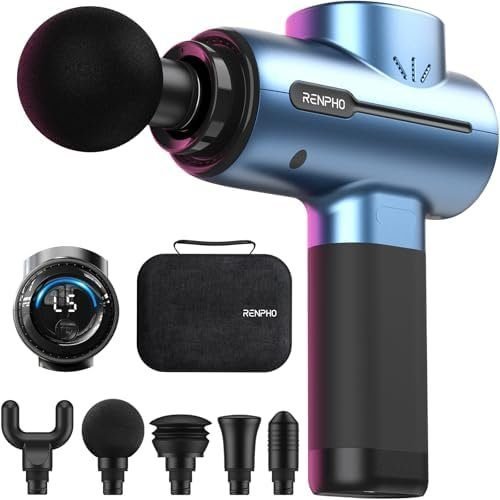 Budget Pick
Percussion therapy at a third of the Theragun price. Multiple heads for back, legs, and shoulders.
Check price on AmazonPremium compact percussion vs. budget power — compared on stall force, noise, and real-world recovery value.
Quick answer: want the quietest, most refined compact gun and don't mind paying for the brand name? Theragun Mini. Want more power and interchangeable heads for a third of the price? RENPHO.
| Spec | Theragun Mini | RENPHO Massage Gun |
|---|---|---|
| Price | $149 | $50 |
| Stall force | Lower (compact design tradeoff) | Higher for the price tier |
| Attachment heads | 1 fixed head | Multiple interchangeable heads |
| Noise level | Very quiet | Low, slightly more audible |
| Portability | Most compact on the market | Compact, slightly larger |
| Battery | ~2 hours per charge | Multiple sessions per charge |
| Best for | Travel, minimalists, brand trust | Best value, home use, targeted work |
Prices as of 2026 — both brands run periodic promotions, confirm at checkout.
Theragun basically created the premium consumer percussion massage gun category, and the Mini is its answer to portability — a genuinely pocket-sized version of the brand's signature triangular ergonomic grip. RENPHO built its reputation the opposite direction: matching most of what a mid-range percussion gun does at a fraction of the price. People comparing these two are usually deciding between paying for brand reputation and refinement versus maximizing raw value.
Theragun's engineering reputation is real — the Mini is built with the same QuietForce technology the brand's larger, more expensive guns use, which means genuinely low operating noise even at higher speed settings, a real consideration if you're using it while others are around or during a video call. The ergonomic grip, refined over multiple product generations, sits naturally in the hand for extended use without the wrist fatigue some cheaper guns cause during longer sessions. Its size is the whole point — small enough to actually get thrown in a gym bag or carry-on without a second thought, unlike most full-size percussion guns.
RENPHO's core value proposition is straightforward: meaningfully more stall force (the resistance the motor can push through before stalling on dense muscle) than the Mini, at about a third of the price, plus multiple interchangeable heads for different muscle groups — a flat head for large areas like quads and lats, a bullet head for precise spots. For anyone whose primary goal is effective percussion therapy on a budget, rather than a specific brand's engineering pedigree, RENPHO delivers most of the practical benefit at a fraction of the cost.
This is the single biggest practical difference between these two, and it's a direct consequence of the Mini's compact size. Stall force measures how much resistance the gun's motor can push against before the head stops moving — higher stall force means more effective deep-tissue work on large, dense muscle groups (glutes, quads, lats) or on people with significant muscle mass. Theragun deliberately traded stall force for size and refinement with the Mini — it's genuinely excellent for general muscle maintenance, smaller muscle groups, and travel use, but it's not the brand's most powerful option by design. RENPHO's larger body allows for a stronger motor and correspondingly higher stall force at a similar or smaller price point, which is a real practical advantage for anyone specifically targeting larger, denser muscle groups.
Theragun Mini: built to Theragun's broader reputation for durability, and the compact motor holds up well under the lighter-duty use the Mini is designed for. The main wear point across the whole category — battery capacity — applies here too: expect somewhat reduced runtime per charge after 18-24 months of regular use, which is normal lithium battery degradation. The single fixed head means there's nothing to lose or misplace, but also nothing to swap for different muscle groups.
RENPHO Massage Gun: the interchangeable heads are the part most likely to need attention over time — the attachment points can loosen slightly with heavy repeated swapping, though this rarely affects actual function. Like the Mini, battery capacity fades gradually with regular charging cycles. The motor itself has a solid track record for the price point, without a well-documented pattern of premature failure under normal home use.
Theragun's QuietForce technology is a genuine, noticeable difference — the Mini operates at a noise level meaningfully lower than most budget guns, RENPHO included, even though RENPHO is itself reasonably quiet for its price tier. This matters most in shared living spaces, offices, or any situation where you're using the gun around other people or on a call. If noise is a genuine dealbreaker — using it at a desk during work hours, in a shared apartment with thin walls — the Theragun's quieter operation is worth factoring in beyond the raw feature comparison.
RENPHO ships with a set of interchangeable heads — typically a flat head for large flat muscle groups like quads, lats, and calves, a bullet head for pinpoint work on trigger points and smaller muscles like the forearm or foot, and a fork/U-shaped head for either side of the spine and Achilles. Swapping takes a firm pull-and-twist and a few seconds; it's not fussy, but it does mean stopping mid-session to change heads if you're working multiple muscle groups. The Theragun Mini ships with a single fixed head by design — Theragun's reasoning is that one well-shaped standard head covers the vast majority of use cases without adding bulk or moving parts to a device whose entire selling point is being small. In practice, if you only ever use a massage gun on your own quads and calves after a run, the Mini's single head is genuinely enough; if you're working on a partner, covering your back, feet, and forearms, or dealing with a specific trouble spot that wants a narrower head, RENPHO's included variety does real work the Mini simply can't.
Theragun rates the Mini at roughly 2 hours of continuous run time per charge, which sounds thin next to RENPHO's multi-session battery, but the context matters: most individual sessions run 5-15 minutes per muscle group, so 2 hours of total runtime is still several weeks of typical personal use between charges for most people. RENPHO's battery is rated for meaningfully more total runtime per charge, which matters more if you're using the device on multiple people, running longer sessions, or simply don't want to think about the charge level often. Neither gun charges especially fast — budget 2-3 hours for a full charge on either — so the practical difference shows up in how often you have to remember to plug it in, not in how long any single session can run.
Skip the Mini if raw power on large muscle groups is your primary goal — someone with significant muscle mass working on glutes, quads, or lats after heavy leg day will hit the Mini's stall force ceiling faster than they'd like, and will get more practical relief from RENPHO's stronger motor for the same money spent on attachments instead of the brand name. It's also the wrong pick if you want to work on a training partner or family member regularly; the shorter runtime and single head are built around solo, personal use, not shared multi-person rotation.
Skip RENPHO if you specifically need the quietest possible device — using it during work calls, in a shared thin-walled apartment late at night, or anywhere near a sleeping baby or partner — because the Mini's QuietForce engineering is a real, noticeable step down in operating noise that RENPHO's otherwise solid budget performance doesn't match. It's also the wrong pick for anyone who travels constantly and wants the smallest possible footprint in a gym bag or carry-on; RENPHO is compact for its price tier, but the Mini is built around being genuinely pocket-sized in a way RENPHO's larger body doesn't match.
Winner: RENPHO Massage Gun, for most buyers, on pure value — more stall force, interchangeable heads, and multiple sessions per charge, all at roughly a third of the Theragun Mini's price. Buy the Theragun Mini instead if noise level and portability are the deciding factors for your specific situation — its refined engineering and genuinely compact size solve a real problem RENPHO's larger body doesn't, and if brand trust and Theragun's broader ecosystem (companion app, guided routines) matter to you specifically.
For most people focused purely on percussion therapy effectiveness, no — RENPHO delivers comparable or better practical results for large-muscle work at a fraction of the cost. The Theragun's premium buys you meaningfully quieter operation, a more refined grip, and brand ecosystem features, which are real but secondary to raw recovery effectiveness for most buyers.
Neither is a substitute for hands-on professional massage or physical therapy for a specific injury or condition — both are maintenance tools for general muscle soreness and tightness, not clinical treatment devices. For anything beyond general recovery, see an actual professional.
The Theragun Mini's lighter weight and ergonomic grip are generally easier to hold and maneuver for extended periods, which can matter for anyone with less hand or wrist strength using the device on themselves for longer sessions.
For general full-body maintenance, RENPHO's multiple heads are a genuine practical advantage — a flat head for large muscle groups and a more precise head for smaller, targeted spots covers meaningfully more use cases than a single fixed head. If your use case is narrow (just legs after runs, for example), one well-chosen head may be all you need either way.
30-60 seconds per spot is a reasonable range on either device — longer risks bruising or irritating the tissue rather than helping it recover. Move the gun slowly across the muscle rather than holding it in one exact spot the entire time.
The Theragun Mini, clearly — its QuietForce technology is specifically engineered to minimize operating noise, and it's the better choice if you're using it in a shared bedroom or thin-walled apartment at odd hours.
For the full recovery equipment breakdown, see best recovery tools and the recovery tools under $100 guide for a complete budget-friendly recovery kit built around RENPHO specifically.