 Budget Pick
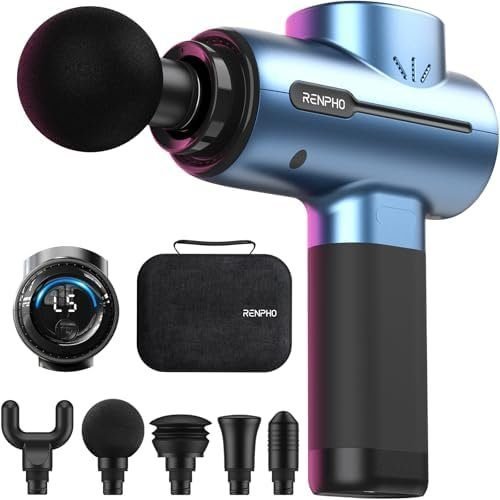
RENPHO Massage Gun
Percussion therapy at a third of the Theragun price. Multiple heads for back, legs, and shoulders.
Check price on AmazonAs an Amazon Associate I earn from qualifying purchases.
Massage gun, foam roller, back wheel, and mat — a complete recovery kit for less than one PT visit.
Training breaks muscle down; recovery builds it back. You do not need a $600 gun and a cold plunge — this kit covers soft tissue, mobility, and daily maintenance with every item under $100.
Recovery isn't the passive part of training — it's when the actual adaptation happens. Training creates the stimulus (breaking down muscle fibers, taxing connective tissue); recovery is when the body repairs and strengthens in response. Skipping recovery work doesn't just mean more soreness — it's a genuine bottleneck on how much productive training you can actually do, because tight, undertreated tissue restricts range of motion and raises injury risk in ways that slow you down more than a few minutes of rolling or massage gun work ever would.
The good news is that effective recovery tools are some of the cheapest equipment in this entire niche. A full kit under $100 covers the same soft-tissue and mobility bases as a physical therapy session that alone often costs more than everything below combined.
Percussion therapy — rapid, deep pulses into muscle tissue — at roughly a third of what a Theragun costs, with multiple speed settings and interchangeable heads for different muscle groups (a flat head for large muscles like quads and lats, a bullet head for targeted spots like the traps). Battery life covers several sessions per charge, and the noise level is low enough for shared living spaces, unlike some budget massage guns that sound like a power drill. The honest comparison to Theragun: RENPHO's stall force (how much resistance the motor can push through before stalling) is lower than premium guns, which means it works less effectively on very large, dense muscle groups on people with a lot of muscle mass — still genuinely useful for most people, just not the ceiling of the category. What wears out first: the battery loses capacity after a couple years of regular charging cycles before the motor does, which is normal for any rechargeable device.
A patterned, multi-density foam roller — the surface pattern (rows of raised ridges) mimics the feel of a massage therapist's hands more closely than a smooth foam cylinder, hence the "physical therapists actually recommend it" reputation. Compact at 13 inches, which matters for storage and for travel compared to full-length 36-inch rollers. This is the foundational recovery tool for a reason: rolling large muscle groups (quads, IT band, lats, glutes) before and after training improves how tissue feels and moves, at the lowest cost and simplest learning curve of anything on this list. Wrong for anyone expecting the same depth and precision as a massage gun on smaller, harder-to-reach spots — a roller works on broad muscle groups pressed against the floor, not targeted point work.
A curved wheel, not a flat cylinder — you lie back over it and it supports your spine's natural curve while stretching the back in a way a flat roller physically can't replicate. Multiple sizes are typically sold together (a larger wheel for a gentler stretch, a smaller one for deeper work) so the intensity scales as flexibility improves over weeks of use. This solves a specific, common problem a standard foam roller doesn't: lower and upper back tightness from sitting or from heavy lifting, particularly after squat and deadlift days when the spine has been under real compressive load. Start with the largest wheel and shorter sessions — going straight to the smallest, most aggressive wheel size before your back has any flexibility built up is the most common way people find this tool uncomfortable rather than helpful.
6mm of cushion underneath every roller, wheel, and stretching session in this kit — skip it and a hard floor becomes the actual reason recovery work gets abandoned within a few weeks, not the tools themselves. Doubles as the floor-work surface for any mobility or stretching routine beyond what's listed here. The cheapest item in the kit and arguably the one most people underrate, since it's the difference between recovery work being comfortable enough to do daily versus something you dread on a cold hardwood or tile floor.
| Tool | Price | Solves | Skip if |
|---|---|---|---|
| RENPHO Massage Gun | $50 | Deep percussion on large muscle groups | You want Theragun-level stall force |
| TriggerPoint GRID Roller | $25 | Broad muscle group rolling | You only need targeted spot work |
| Chirp Wheel+ | $40 | Back-specific stretch and roll | Back tightness isn't a problem for you |
| GAIAM Yoga Mat | $18 | Comfortable floor-work base | You already have a mat |
Total: $133 for the full kit, or $83 if you skip the Chirp Wheel and stick with the roller and gun for general recovery.
1. Foam roll first, 5-8 minutes, on major muscle groups worked that day — quads and glutes after leg day, lats and upper back after pulling work. 2. Massage gun on specific tight spots, 30-60 seconds per spot, moving slowly rather than lingering in one place. Never directly on a joint or bone. 3. Chirp Wheel on rest days or after heavy squat/deadlift sessions, starting with the largest, gentlest wheel size. 4. Consistency beats intensity. Ten minutes after every session, using the mat as the base, does more for how you feel week to week than an occasional hour-long recovery binge.
The massage gun's battery is the part most likely to show real wear — expect somewhat shorter runtime between charges after 18-24 months of regular use, which is normal lithium-battery degradation rather than a defect; interchangeable heads themselves rarely fail. The foam roller's surface pattern compresses and softens gradually with heavy, frequent use over a year or two — a sign it's providing less firm pressure than when new, and a reasonable trigger to replace it rather than a failure. The Chirp Wheel's build is largely wear-resistant under normal use; the main failure mode is choosing too aggressive a size too early and finding it uncomfortable, not the product breaking down. The mat is the item most people replace soonest, simply from surface wear and grip loss with frequent use — a $18 item is cheap enough to treat as a periodic replacement rather than a one-time purchase.
Not identical — premium guns have more stall force (power that doesn't stall out under pressure on large, dense muscle) and often quieter motors. For most people's actual use case — general soreness and muscle maintenance, not clinical-level deep tissue work — a budget gun like the RENPHO covers the practical need at a fraction of the cost.
30-60 seconds per spot is a reasonable range — longer than that risks bruising or irritating the tissue rather than helping it. Move the gun slowly across the muscle rather than holding it perfectly still in one place.
There's real evidence that foam rolling improves short-term range of motion and reduces perceived soreness, even if the exact mechanism (whether it's genuinely changing tissue or partly a nervous-system effect) is still debated. Either way, the practical result — feeling and moving better — holds up.
Check with a doctor or physical therapist first for any existing injury rather than guessing — the wheel is designed for general tightness and maintenance in a healthy back, not as a treatment for a diagnosed condition.
Start with the roller and mat if budget is tight — that's the lowest-cost, simplest-to-learn combination and covers the fundamentals. Add the massage gun once budget allows for faster, more targeted relief, and the Chirp Wheel specifically if back tightness is a recurring issue.
After every training session ideally, for 5-10 minutes — consistency matters more than any single long session. Daily use, even on rest days, is reasonable and not something you can meaningfully overdo with these particular tools at normal-use pressure and duration.
For the full ranked recovery equipment breakdown, see best recovery tools, and for a direct head-to-head on the two most popular percussion options, see Theragun Mini vs. RENPHO massage gun.
Budget Pick
Percussion therapy at a third of the Theragun price. Multiple heads for back, legs, and shoulders.
Check price on Amazon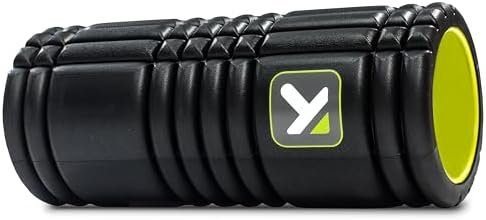 Best Seller
Multi-density foam that holds its shape for years. The foam roller physical therapists actually recommend.
Check price on Amazon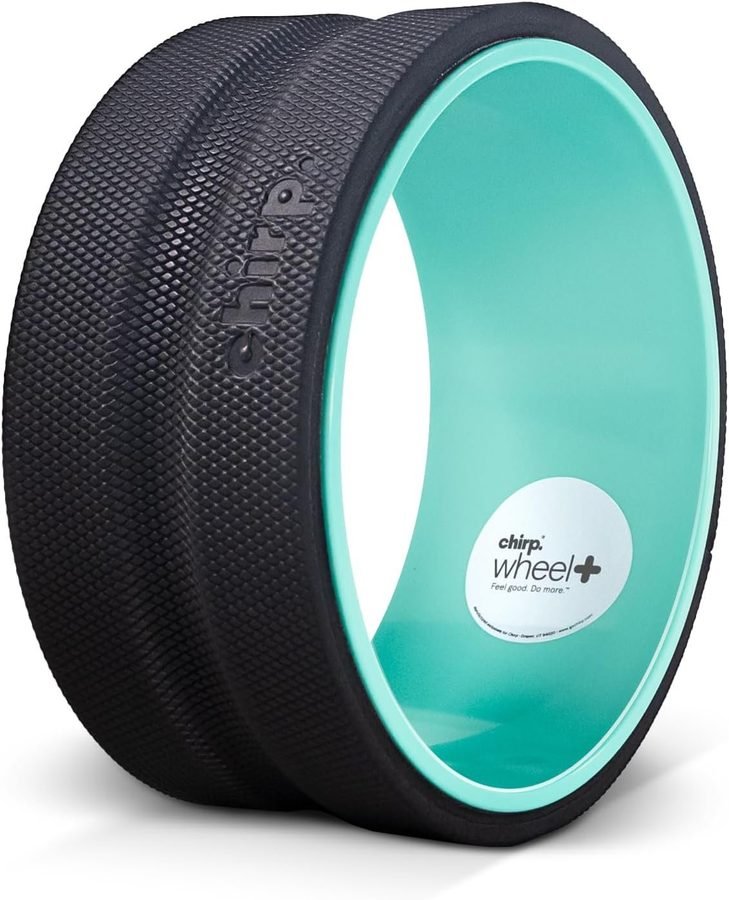
Rounded wheel that stretches and rolls your back at once. Genuinely different from a flat foam roller.
Check price on Amazon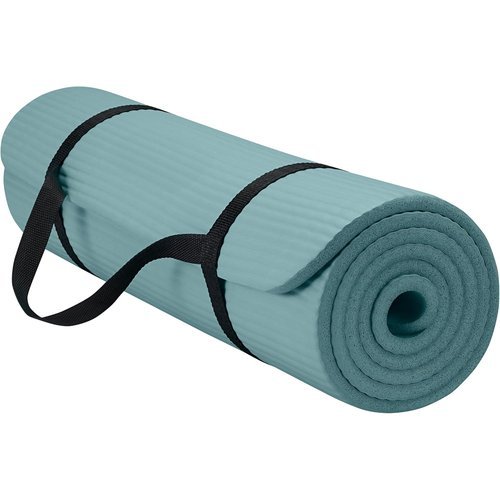 Budget Pick
6mm thick, non-slip texture, includes carry strap. Best bang-for-buck yoga mat under $25.
Check price on Amazon