 Space Saver
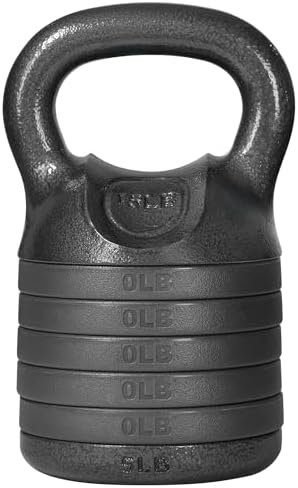
Yes4All Adjustable Kettlebell
One kettlebell, multiple weights. Add or drop plates in seconds for swings, goblet squats, and presses without a full rack.
Check price on AmazonAs an Amazon Associate I earn from qualifying purchases.
Space Saver
One kettlebell, multiple weights. Add or drop plates in seconds for swings, goblet squats, and presses without a full rack.
Check price on Amazon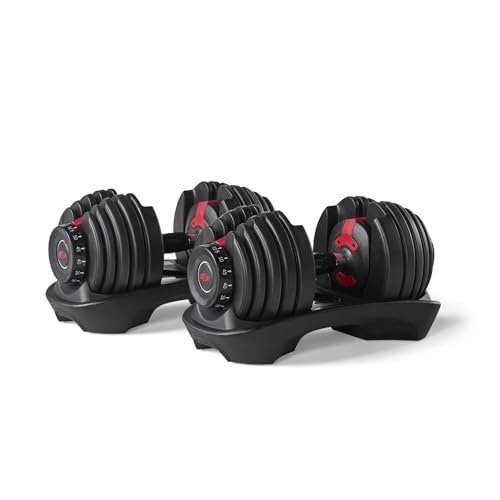 Top Pick
5 to 52.5 lbs in one dumbbell. Replaces 15 sets of weights. The home gym essential if you only buy one thing.
Check price on AmazonAn adjustable kettlebell and adjustable dumbbells solve different training problems — here's which one to buy first.
Quick answer: want the single most versatile tool for pressing, rowing, and curling with precise control? Adjustable dumbbells. Want ballistic, power-based movement and a tool that trains your hips and grip in ways a dumbbell doesn't? A kettlebell.
| Spec | Yes4All Adjustable Kettlebell | Bowflex SelectTech 552 |
|---|---|---|
| Price | $60 | $349 |
| Weight range | Adjustable, model-dependent (commonly 10-40 lb) | 5-52.5 lb per hand |
| Best movements | Swings, cleans, snatches, goblet squats | Presses, rows, curls, controlled lifts |
| Handle | Single offset handle | Two matched dumbbells |
| Space | One compact unit | Two dumbbells plus cradle |
| Learning curve | Higher — technique matters for ballistic moves | Lower — most movements are intuitive |
Prices as of 2026 — both fluctuate with promotions, confirm at checkout.
Both promise to be the "one piece of equipment" answer for a home gym on a tight budget or tight floor space, and both genuinely deliver on that promise — just for different kinds of training. The real question isn't which tool is better in the abstract, it's whether your training leans toward controlled, symmetric strength work or explosive, hip-driven power work, because that's what actually separates these two categories of equipment.
A pair of dumbbells covers more standard strength exercises than a single kettlebell does — bench press, overhead press, rows, curls, lateral raises, lunges, and Romanian deadlifts all work cleanly with two matched, symmetric loads in each hand. The learning curve is close to zero: if you've ever picked up a weight, you can safely start pressing or rowing with a dumbbell the same day. For anyone whose primary goal is straightforward hypertrophy or general strength without a ballistic or conditioning component, dumbbells simply cover more ground per dollar of movement variety.
A kettlebell's offset handle and off-center mass reward a completely different kind of movement — swings, cleans, snatches, and Turkish get-ups all use momentum and hip drive in a way a symmetric dumbbell load can't replicate. Kettlebell swings specifically train explosive hip extension while also delivering a genuine cardio and conditioning effect, which is a combination almost no other single piece of home equipment offers. For anyone whose training includes a conditioning or power component — not just building muscle in a controlled range of motion — a kettlebell does something dumbbells structurally can't.
This is the single most important practical difference, and it's often glossed over in generic "kettlebell vs dumbbell" content. Most dumbbell exercises are forgiving of imperfect form in a way that mostly costs you some effectiveness, not safety — a slightly uneven press or a rounded-back row is a coaching cue, not usually an injury risk at moderate weight. Kettlebell ballistic movements are less forgiving: a kettlebell swing done with a rounded back and an arm-driven pull instead of hip-driven momentum is a genuine injury risk, especially as weight increases. This doesn't mean kettlebells are dangerous — millions of people train with them safely — but it does mean a true beginner training alone from a video is taking on more technique risk with a kettlebell swing than with a dumbbell row on day one. If you're brand new to strength training with nobody to check your form, dumbbells are the lower-risk starting point; a kettlebell is worth adding once basic hip-hinge mechanics are solid, whether that comes from bodyweight hip hinges, deadlifts, or a few sessions with someone who can check your form.
Yes4All Adjustable Kettlebell: the plate-locking mechanism is the part to watch — it's what lets one kettlebell cover a range of weights, and it's also the one moving part on an otherwise solid piece of steel. A loose plate mid-swing is the specific failure mode that makes a poorly-maintained adjustable kettlebell riskier over time than a solid cast-iron one; a quick pre-session check that everything is locked down is cheap insurance and takes seconds. Beyond that mechanism, there's little to wear out — the handle and shell are built to handle years of swings and cleans without meaningful degradation.
Bowflex SelectTech 552: the selector dial sees the most repeated stress, since every set means turning the dial and lifting the handle off the cradle. The plastic weight shells are durable but can crack if dropped from height rather than lowered under control — a cracked shell means an audible rattle and eventually a replacement part. The dial itself rarely fails outright within a normal ownership period, though it can develop minor stiffness after a couple of years of heavy daily use, usually traced back to the cradle not sitting on a fully level surface.
Skip the kettlebell as your first and only purchase if you're brand new to structured strength training and don't have anyone to check your hip-hinge form in person — the technique risk on swings specifically is real, and a dumbbell-first approach lets you build strength safely while you either learn kettlebell technique separately or build enough general strength that adding it later is lower-risk. It's also the wrong tool if your primary goal is pure muscle-building through controlled presses, rows, and curls — a kettlebell can do some of this, but a matched pair of dumbbells does it more precisely and comfortably.
Skip dumbbells as your only tool if conditioning and explosive power output are actually what you're training for — no amount of dumbbell work replicates what a kettlebell swing or clean does for hip-driven power and cardio-strength hybrid training. They're also the wrong single purchase for someone specifically chasing kettlebell-sport-style training (kettlebell clubs, competitive kettlebell lifting) since that's a different skill and equipment category entirely.
Winner: adjustable dumbbells, for most first-time buyers. They cover more standard strength movements safely from day one, with a near-zero technique learning curve, and the Bowflex 552's 52.5 lb ceiling gives real room to grow before any upgrade is needed. Buy the kettlebell instead if your training already includes — or is specifically built around — conditioning, hip-driven power, and ballistic movement, and either you already know solid hip-hinge technique or you're willing to learn it properly before loading a heavy swing.
A kettlebell's thick handle and shifting mass during swings and cleans put real, continuous demand on your grip and forearms in a way a dumbbell's straight, static handle doesn't — this is a genuine training benefit if grip strength is a goal, but it also means a kettlebell session fatigues your grip faster, which can become the limiting factor on higher-rep sets before your target muscles are actually done. Dumbbells load the grip too, but more predictably and less aggressively, since the weight stays centered and doesn't swing or rotate through the movement. If forearm and grip strength specifically is something you're training for — rock climbing, grappling, or just a stronger handshake — a kettlebell earns its place in a way a dumbbell can't fully replicate; if grip fatigue getting in the way of a leg or back workout is already a problem for you, dumbbells are the more forgiving tool day to day.
Yes, and plenty of home gyms end up with both once budget allows — they don't compete for the same exercises, so there's no real redundancy. A reasonable buy order for most people is dumbbells first (broader exercise coverage, lower technique risk), then a kettlebell once basic strength and hip-hinge mechanics are solid and conditioning becomes a specific goal rather than an afterthought.
Not well — a single kettlebell's offset handle makes precise, symmetric pressing and curling movements less comfortable than a pair of matched dumbbells, even though many exercises technically transfer. Think of a kettlebell as adding a capability dumbbells lack, not replacing what dumbbells already do well.
Yes, particularly for the posterior chain (glutes, hamstrings, back) through swings and cleans, but it's generally less precise for isolating and progressively overloading specific muscles the way a controlled dumbbell press or curl is. Most serious lifters use kettlebells to supplement, not replace, dumbbell or barbell work.
No — kettlebell swings and cleans get much of their training effect from speed and hip drive, not just raw weight, so a moderate kettlebell used with good technique and adequate reps delivers a real conditioning effect well before you need a heavy one.
Generally dumbbells, assuming controlled movements and appropriate weight — kettlebell ballistic movements load the lower back dynamically through the hip hinge, which is exactly the pattern that needs to be technically sound before adding load if there's an existing back issue. Check with a physical therapist or doctor before starting either if you have a diagnosed condition.
The handle and shell hold up the same either way — the difference is the internal plate-locking mechanism, which is one more part that can loosen over time versus a one-piece cast kettlebell that has nothing to maintain. A quick lock check before ballistic movements specifically is worth the few seconds it takes.
For the full resistance training field, see best resistance training gear, and for a bodyweight-only alternative that needs neither, see the bodyweight home setup guide.